Artifact Examination: Using Objects to Unlock Ideas
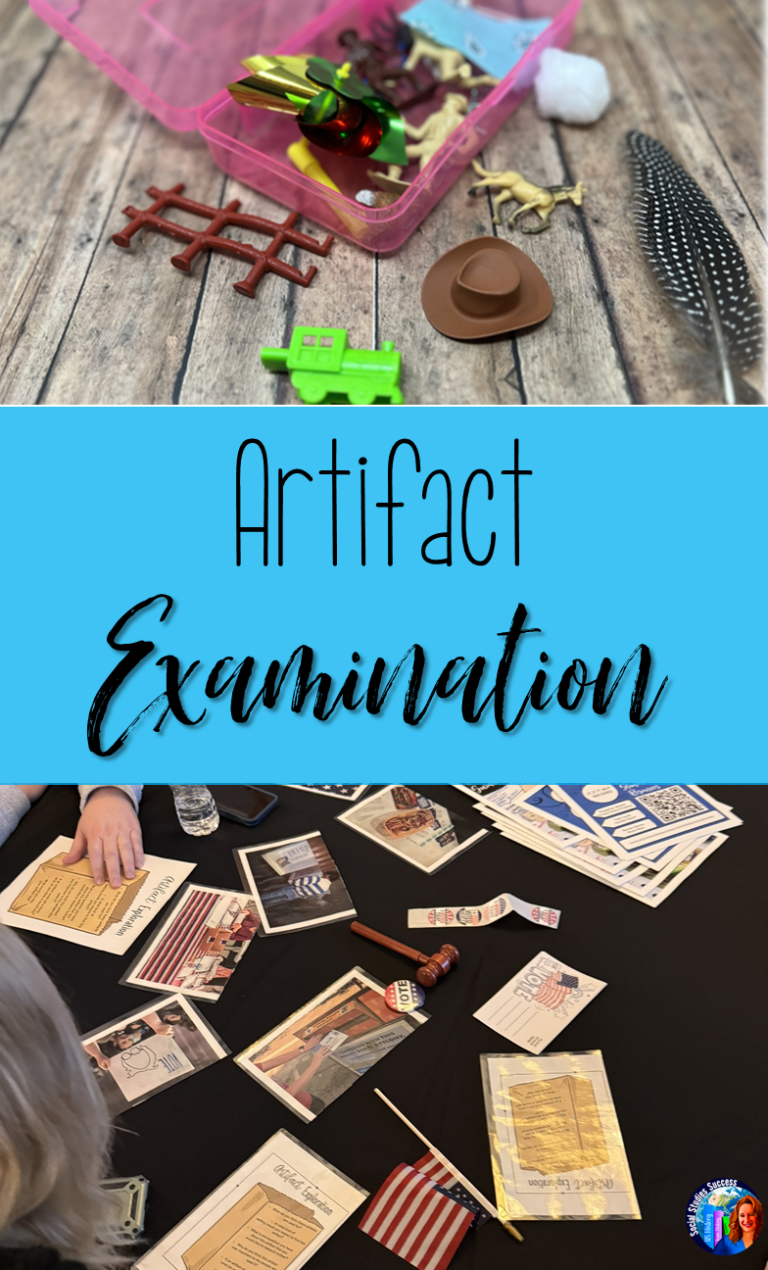
Put a list of vocabulary words on the board and you get glazed eyes. Set a box on the table with a cowboy hat, a coil of rope, and a small Texas flag inside, and you get leaning in. Students start picking things up, turning them over, and arguing about what they are before you have said a word.
That reaction is the whole reason I use Artifact Examination. It is a before-reading strategy, and its job is to give students something concrete to hang the new vocabulary on before they meet it in the text.
Why Objects Before Words?
Most of the vocabulary in a history unit names things students have never held or seen: a powder horn, a spinning wheel, a quill and inkwell, a tricorn hat. When those words show up in a reading passage, they are just letters on a page. When students have already handled the object (or a good image of it), the word lands on something they remember.
Artifacts also do something a word list can’t. They make students ask questions. What was this used for? Who owned it? Why would anyone need this? Those are a historian’s questions, and students ask them on their own when the object is in front of them. (If you used my Thinking Like an Historian lesson at the start of the year, this will feel familiar to your students.)
How It Works
- Prepare artifact sets. Place three to six artifacts, real objects or images, in a bag or box tied to the upcoming lesson. Choose items that spark curiosity and point toward the key concepts you want students to learn.
- Introduce the challenge. Tell students they will examine the artifacts to predict what they are about to learn. That’s it. Don’t give away the topic.
- Observe and discuss. In pairs or small groups, students examine each artifact and talk through three questions: What do you see? What do you think? What do you wonder?
- Make connections. Push their thinking with questions like What might this have been used for? and What does it reveal about the past? Then have groups sort related artifacts together and explain the connections they notice.
- Predict the learning. Each group gives its artifact collection a title and writes a short prediction describing what they think the upcoming lesson will be about.
- Share and transition. Groups share their predictions, and you move straight into the lesson or reading. Now students are reading to find out whether they were right.
A Word on Choosing Artifacts
Not every topic belongs in a box. Avoid artifacts tied to traumatic events or topics that need significant historical context before students can handle them responsibly, such as the Holocaust or slavery. An object passed around a table with no framing can trivialize real suffering. Save those topics for approaches that give students the context first.
You also don’t need a museum budget. Images work just as well as real objects. Print photos of the artifacts, mount them on cardstock, and you have a set you can reuse every year. If you like working with images, my recent post on Using Images for Pre Reading pairs well with this strategy.
What Students Get Out of It
- History becomes tangible and memorable. Students remember the thing they held long after they forget the definition they copied.
- Inquiry skills grow. Observing, questioning, and drawing conclusions from evidence is the work historians do.
- Historical reasoning gets stronger. Grouping artifacts and explaining the connections asks students to think about cause, purpose, and context, not just recall.
And there’s a bonus: by the time students open the reading, they already have a stake in it. They made a prediction, and they want to know if they were right.
Find This Strategy and More
Artifact Examination is one of the before-reading strategies in my Reading Strategies for Social Studies Teacher Manual, alongside during-reading, note-making, and after-reading strategies that walk students through a text from start to finish. For the bigger picture of how those stages fit together, read Reading Strategies for Social Studies.