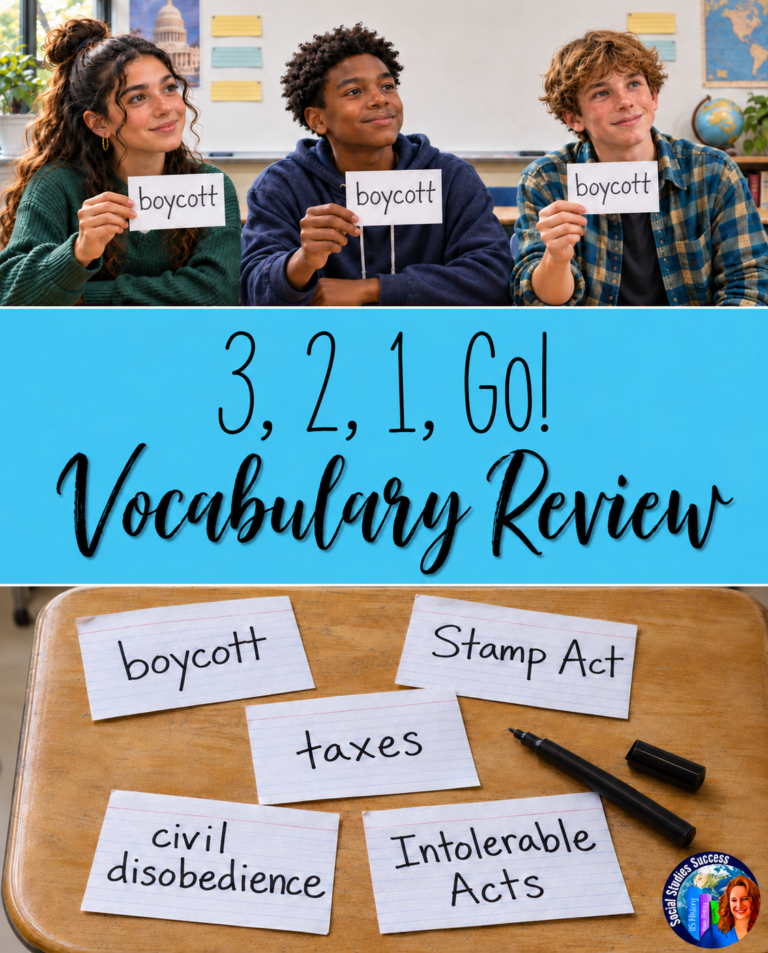
You read a clue relating to one of your vocabulary terms on your word wall. Students consider their choices. Then you call, “3… 2… 1… Go!” Around the room, students raise vocabulary cards or point to a term on the word wall. Everyone has a way to answer, and you have a reason to ask, “Why did you choose that word?”
That is the routine behind 3-2-1 Go!, a vocabulary review activity that uses index cards to get students selecting terms, explaining their choices, and making connections to the content they are learning.
The questions give this activity its depth. Students might begin by identifying a definition, then use the same vocabulary to explain a cause, compare events, or defend an answer to your unit’s essential question.
Use it after vocabulary has been introduced and practiced. It can fit into a warm-up, a review before an assessment, or a brief return to an earlier unit.
Start with five cards and a visible word bank
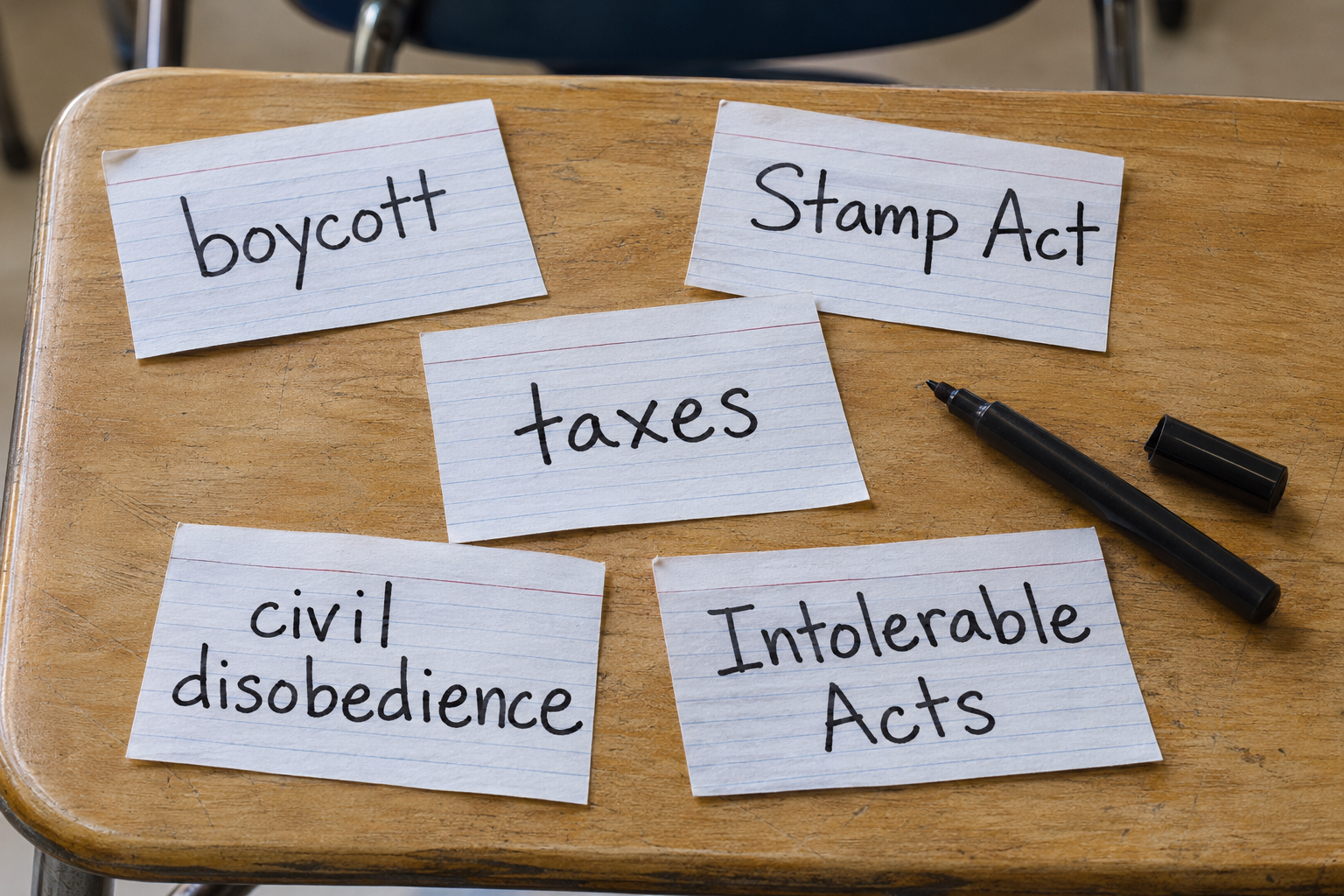
Use this strategy with your current word wall. Give each student five index cards and a dark marker. Students choose five different terms and write one on each card in large letters you can read from the front of the room.
The word bank should contain more than five terms so students have different combinations of cards. Keep the entire bank visible throughout the activity.
Prepare about 8–10 questions for a round, allowing roughly 5–10 minutes for the responses and discussion. Plan additional time for making cards and completing the writing follow-up. If you want a second round, have five more cards ready for each student.
Give everyone time to think and respond
- Read a clue or question. Students consider their answers silently and keep their cards down. Pause long enough for them to think before beginning the countdown.
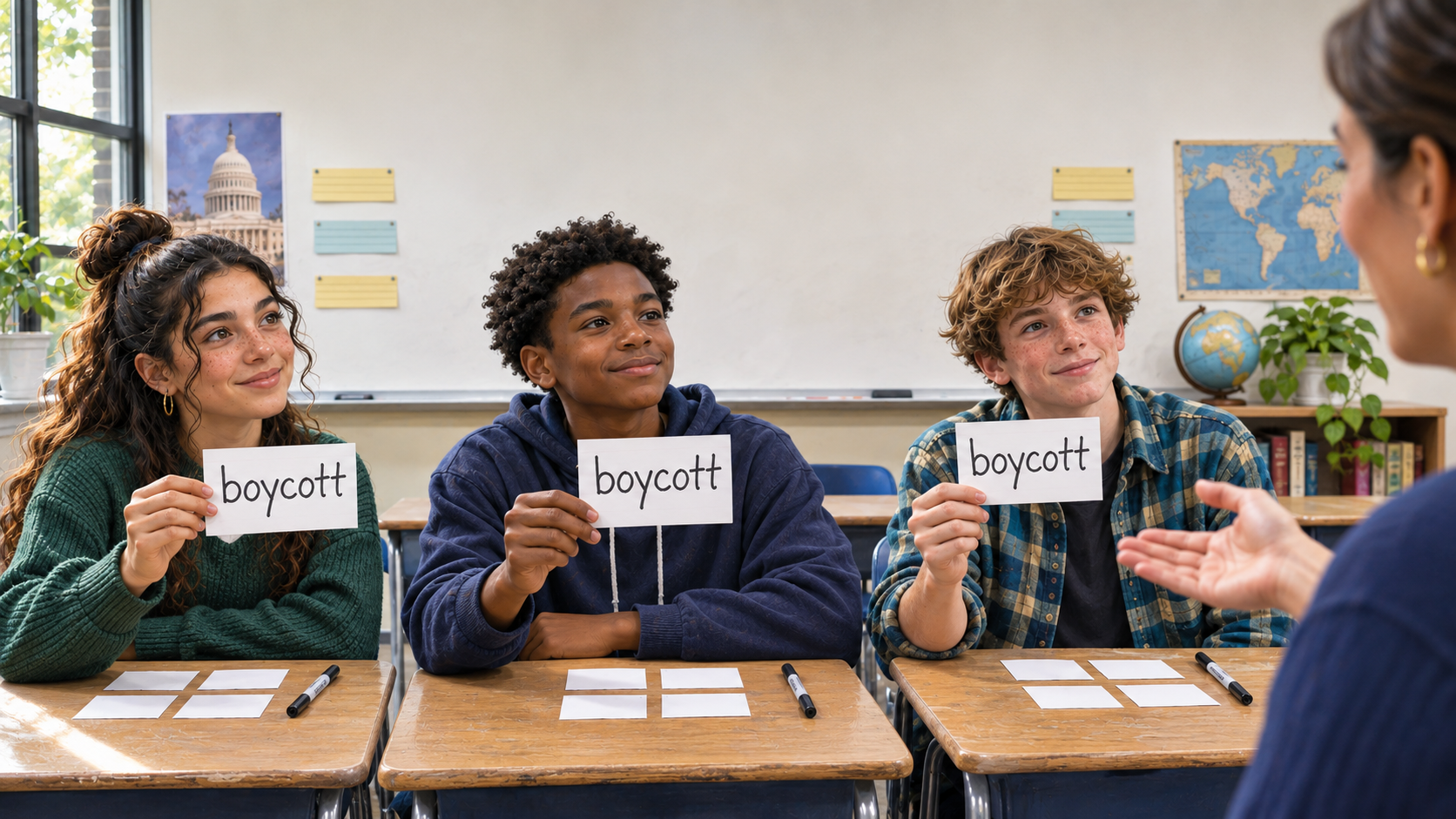
- Call “3… 2… 1… Go!” Students who have a matching card hold it up together. For a question with several possible answers, ask students to choose one term they can explain.
- Include students without the matching card. They point to their answer in the word bank. Every student responds, even when the correct term is not in their hand.
- Ask for the explanation. Invite a student to identify the chosen term and explain the connection. When answers differ, ask another student to explain a different choice.
Post this response stem:
“I chose ______ because ______.”
Keep the emphasis on the explanation. For an open-ended question, accept different answers when the historical information and reasoning support them. Even students who recognize a word immediately should wait for “Go!”
Build questions that deepen the review
Start with recognition, then move into relationships and application. You can change the thinking required while keeping the response routine familiar.
Recognize the term
Begin with definitions, factual clues, symbols, or brief actions that students can connect to a word.
For an American Revolution vocabulary review, try this clue:
“A group of people refuses to buy certain goods to protest a law or policy. What vocabulary term describes this action?”
Students select boycott. Ask them to explain which details in the clue helped them choose it. Students should connect “refuses to buy” and “to protest” to the meaning of the word.
Then ask, “Would choosing not to buy something because it costs too much necessarily be a boycott? Why or why not?” This follow-up helps students explain that a boycott involves refusing to buy as a deliberate form of protest.
Relate the terms
Now ask students to connect vocabulary through categories, similarities, differences, sequence, or cause and effect.
For example:
“Hold up a term that helps explain how colonists protested British policies.”
A student might choose boycott and explain that colonists refused to purchase British goods to protest Parliament’s taxes and other policies.
Follow with “How was that action intended to put pressure on Britain?” The student now has to explain the relationship between the vocabulary and the historical situation.
Useful prompts for other units include “Hold up a term that has something in common with ______” and “Hold up an event that was an effect of ______.”
Extend the thinking
Finally, ask students to apply terms to a new situation, connect them to an earlier unit, or use them to answer a broader question.
Try “Hold up the term that best helps answer our essential question. Be ready to defend your choice.” For an American Revolution unit, you might ask students to choose the term they think best explains the growing conflict between Britain and the colonies.
Invite students to support their answers with details from the readings or sources they have studied. You can then ask whether a different term would support another reasonable explanation.
For a second round, students set aside their first five cards and make five new cards with different terms from the same bank. Begin with a brief recognition question, then revisit earlier terms through more challenging connections. Students can still point to any term in the full word bank.
Turn the cards into meaningful writing
After the final round, have students write an original sentence on the back of each card. The sentence should make the meaning of the term clear through a specific detail or explanation.
Model the difference:
Needs more detail: “The colonists had a boycott.”
Shows the meaning: “Colonists used a boycott by refusing to buy British goods to protest Parliament’s policies.”
The second sentence explains both the action and its purpose. Ask students to make their own sentences equally clear. For a challenge, have them use two or more vocabulary terms together in the sentence on their final card.
Then try a partner check. Students keep the card hidden and read their sentence aloud, saying “blank” in place of the vocabulary term. Their partner guesses the missing word before the card is revealed. If several terms could fit, the pair can discuss what detail would make the meaning more precise.
Make the routine work for your students
- Offer language support. Keep the response stem visible and add writing stems such as “One effect of ______ was ______” or “______ is an example of ______ because ______.” These give students, including Emergent Bilingual students, a starting point for their explanations.
- Add partner rehearsal. Let partners briefly discuss a choice before the countdown. Each student still gives a response on “Go!”
- Let students write the clues. After a round, invite students to create a question for one of their terms. Check the questions for accuracy before using them with the class.
- Adjust the length. Use one round for a brief review. For a quick exit activity, have students choose one card and write a sentence that demonstrates its meaning.
Use the responses to plan what comes next
Listen for explanations that reveal a misunderstanding or a connection worth sharing. A raised card gives you an answer to investigate; the explanation and written sentence give you more information about the student’s understanding.
Notice which terms students choose and which they leave out, then ask follow-up questions before deciding what needs reteaching. Save the cards for a later review, or use clear, accurate student sentences as clues the next time you play.
Choose a word bank from the unit you are teaching and try one round of 3-2-1 Go! As students respond, keep coming back to “Why did you choose that word?” That question gives students a reason to explain the history behind the vocabulary.
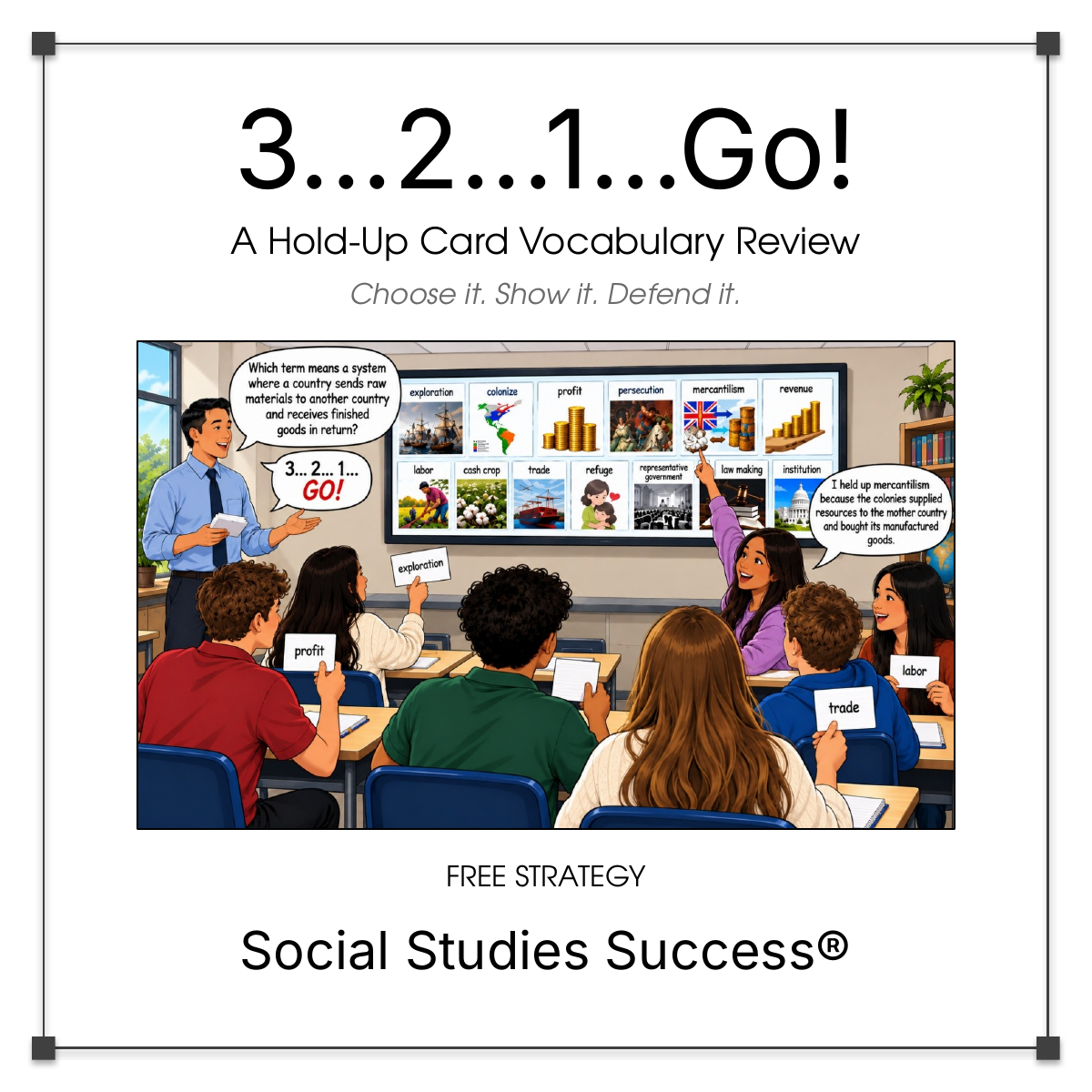
Would you like the free resource describing this strategy in more detail? Click on the image below.
What about an entire Vocabulary Strategies Manual? Click on the image below.